People treat their rings like static objects. They are not. A ring is a piece of precision machinery strapped to the part of your body that moves most. Prongs bend. Solder joints flex. Stones loosen. Metal thins. Most of this happens slowly, invisibly, and cheaply to fix until the morning you notice the ring on your finger feels lighter than it should.
A ten-minute annual check catches almost everything. This is the checklist we hand clients the day they leave the bench, and we mean it literally: most of what goes wrong with a ring is invisible until it is not, and a regular look is the only way to stay ahead of it.
Every month: the quick look
Once a month, hold the ring up to a bright light and look straight down at the center stone. Wiggle it gently with a finger. It should not move. Run a fingernail across each prong tip. A rough, catching edge means a prong has bent or worn through. If you hear a faint rattle when you tap the ring against your teeth, a stone is loose. Stop wearing it until you have it checked.
Every three months: the home clean
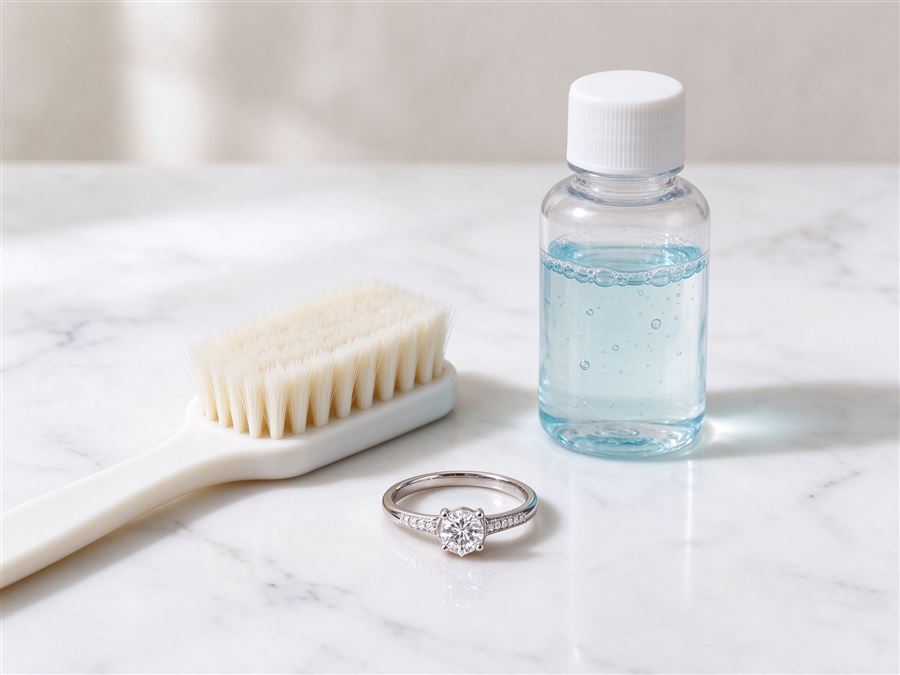
Soak the ring in warm water with a drop of mild dish soap for twenty minutes, then brush gently with a soft toothbrush under and around the stones. Rinse well, pat dry. This removes the skin oils and soap residue that make a stone look dull far faster than wear does. Our full home jewelry cleaning guide covers method and the chemicals to avoid.
Every year: the bench check
Once a year, book the ring in with a jeweler. What should actually happen during that visit:
- Prong inspection and retipping. Prong tips wear thin with daily bumps. A jeweler will rebuild any that are too short or bent.
- Stone tightness check. Every stone, accent and center, wiggled under magnification.
- Solder and shank check. The bottom of the band thins over years of rubbing against surfaces. A ring that has become paper-thin at the base needs a rebuild before it splits.
- Steam and ultrasonic clean. A professional clean removes grime the home soak cannot reach.
- Rhodium dip, if applicable. White gold needs refreshing every couple of years to stay bright.
Life events that deserve an extra visit
Do not wait a full year if something changes. If you have put on or lost weight and the ring spins, get it sized before it slips off in a pool. If you have knocked it hard on a doorframe or a gym rack, bring it in. If you are pregnant and the band feels tight, do not force it. Each of these is a fifteen-minute appointment that prevents a much larger repair. Read more in our notes on resizing through life changes.
What we see most often
The failure we fix most is a worn prong tip. It is a two-minute repair, but a stone lost because of it is a catastrophe. The second most common is a thinned shank on a ring worn daily for a decade or more. Both are entirely preventable on a maintenance schedule. The emergencies we cannot prevent are the ones where a client skipped the check and noticed a missing stone in a hotel sink.
Insurance paperwork, too
An annual visit is also the moment to update your photos and appraisal. Rings wear, stones loosen, and a well-documented check is exactly what an insurer wants to see. If you have not looked at your policy recently, our piece on insuring a bespoke ring walks through what coverage should actually include.
A ring's first decade vs its tenth
A new ring spends its early years looking after itself. The prongs are tight, the shank is full, the finish is sharp. The checks in years one through four are mostly reassuring. The real maintenance starts around year five, when daily contact with desks, door handles and gym equipment begins to thin prong tips and soften the bottom of the band. By year ten, most daily-worn rings need either a retipping or a shank rebuild. None of this means the ring is poorly made. It means it is being worn, which is the point. Healthy patina and a genuine problem are easy to tell apart once you know what a worn prong actually looks like under magnification.
Ten minutes a year, a lifetime on the hand
The rings that last fifty years are not the most expensive ones. They are the ones that came back to the bench every twelve months for a look. A little care, on a calendar, turns a fine piece into an heirloom without drama. Put the date in your phone. Your ring is earning it.