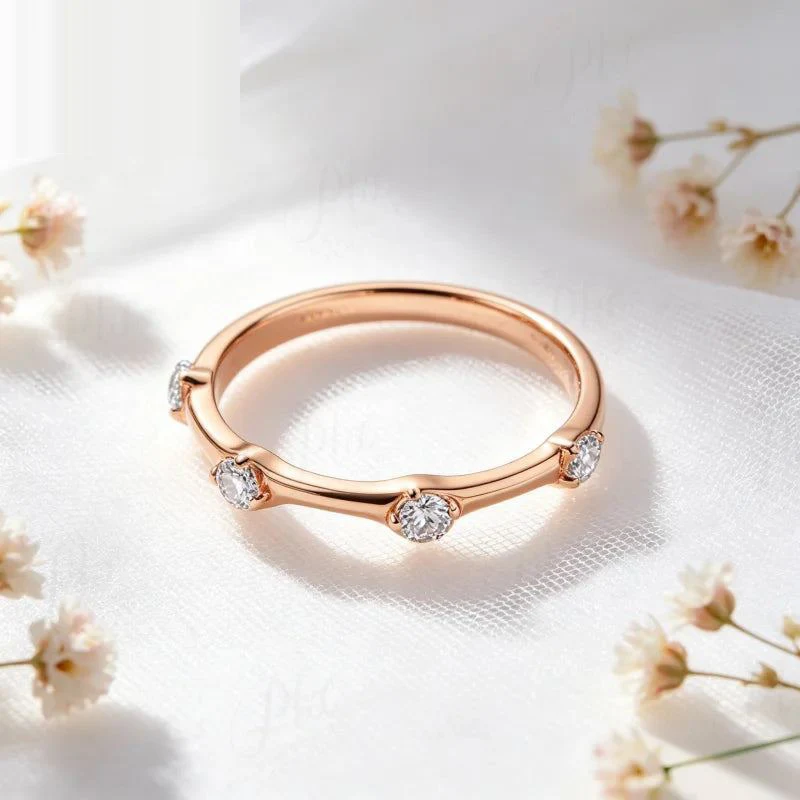
IWhy Returns, Repair, and Warranty Terms Shape Wedding Bands Purchasing Decisions
Wedding bands carry some of the highest emotional stakes in the jewelry category, which means your retail customers scrutinize quality more closely here than on almost any other product line. For wholesale buyers, that scrutiny translates directly into returns, repair requests, and warranty claims — and the way your supplier structures those terms determines whether wedding bands are a profitable category or a service headache.
This article breaks down the practical decisions you face when evaluating a wedding bands supplier on returns, repairs, and warranty coverage, with concrete details you can verify before placing an order.
Unlike fashion jewelry that customers wear occasionally, wedding bands are worn daily through handwashing, gym sessions, yard work, and travel. That constant exposure creates predictable failure points: sizing errors at purchase, metal stress on thin profiles, settings loosening over time, and plating wear on lower-cost finishes. A band made in 14K solid gold behaves differently from one sold as gold vermeil or gold plated over 925 sterling silver, and your warranty exposure differs accordingly.
Understanding those differences is the first step in negotiating terms that protect your margin.
IIKnow Your Own Return Drivers Before Negotiating
Sizing issues dominate the return queue for most retailers selling wedding bands, followed by dissatisfaction with finish or comfort. Manufacturing defects — loose stones, cracks, solder joint failures — are rarer but costlier, because they often surface months after sale when your customer expects a resolution. Your supplier terms need to cover all three scenarios, not just one.
Start by reviewing twelve months of your own sales data if you carry the category already. Count how many returns were sizing-related, how many were finish or comfort complaints, and how many were true defects. That breakdown tells you which supplier terms matter most. If sizing drives most of your returns, priority goes to suppliers offering sample sizing sets and quick remake turnaround. If defects dominate, priority goes to quality control transparency and defect replacement terms.
Separate Defect Claims from Buyer's Remorse
The strongest wholesale agreements distinguish clearly between defects and non-defect returns. A defect claim — a cracked band, a stone separating from its setting, a solder failure — should be handled by the supplier at their cost, including return shipping. A buyer's remorse return, where the retailer ordered the wrong size mix or a customer changed their mind, usually falls back on the retailer.
Suppliers willing to absorb defect costs with a simple photo documentation process are signaling confidence in their inspection standards. Suppliers that resist any defect accountability are signaling the opposite, and you should price that risk into your decision.
IIITesting a Supplier's Quality Control Before You Commit
When you request terms from a wedding bands manufacturer, treat the returns conversation as a test of how they operate. A supplier with genuine inspection discipline will describe their process in concrete terms rather than generalities.
- Ask whether they run incoming material inspection, in-process checks during production, and a pre-shipment AQL inspection before goods leave the factory.
- Confirm the timeframe in which you can report defects after receiving goods, and what documentation they require — photos, video, or a physical return.
- Clarify who pays return freight on confirmed defects and whether replacements ship before or after the defective unit arrives back.
- Check whether custom work carries different return terms than stock inventory.
- Ask for the defect rate history on the specific band styles you plan to order, not just a general company claim.
Stock styles ordered at a low minimum order quantity give you a low-cost way to test returns handling in practice. With a one-piece MOQ on stock designs, you can place a small trial order, run units through your own sales process, and see exactly how the supplier responds when something goes wrong. Custom work at a 30-piece minimum carries more financial exposure, so lock down defect terms in writing before committing to a custom run.
Sampling as Risk Reduction
A sample order is the cheapest warranty insurance available to a wholesale buyer. Sampling takes 7 to 10 days, which is a modest investment compared to the cost of discovering a plating problem after a 200-piece shipment. When evaluating samples, check the inside stamp for metal authenticity, inspect setting edges for sharp burrs, wear a sample for several days to identify comfort issues, and confirm the stated metal matches what you receive.
A sample described as 925 sterling silver with gold plating should arrive stamped and finished accordingly — never as something the supplier calls solid gold when it is plated or vermeil.
Moissanite deserves a specific note here. Moissanite is a lab-created diamond alternative, not a natural diamond, and your supplier should describe it exactly that way on invoices, certificates, and marketing materials. If a supplier's paperwork overstates the stone, that paperwork becomes your liability when a customer or regulator asks questions. Clear, accurate grading documentation reduces dispute risk down the line.
IVWarranty Structures: What to Ask For and What to Expect
Warranty terms vary widely across manufacturers, so compare suppliers on the same checklist. The questions below give you a repeatable framework.
The table below summarizes the key warranty and service terms to compare across suppliers before you commit to a wedding bands order.
| Term | What to Verify | Why It Matters |
|---|---|---|
| Defect window | Days allowed to report defects after delivery | Sets your own customer policy |
| Repair turnaround | Days from receipt to repair completion | Controls customer wait time |
| Remake policy | Free remake terms for confirmed defects | Protects margin on claims |
| Freight responsibility | Who pays return shipping on defects | Affects cost per claim |
Once you have these answers in writing, compare them side by side. A supplier that answers every line with specifics — named inspection stages, defined day counts, clear freight responsibility — is easier to work with than one offering broad assurances. Written terms also give you something to reference when a dispute does arise, which shortens resolution time considerably.
Repair Turnaround and Its Effect on Your Retail Service
Bulk production for new orders runs 15 to 25 days after approval, and repairs typically follow a similar rhythm because they re-enter the same production workflow. Ask whether repairs are handled within the standard production cycle or fast-tracked separately, and whether a remake of a defective unit moves faster than a physical repair.
For your retail operation, a repair that takes four weeks means a customer without their wedding band for a month; knowing the timeline up front lets you set honest expectations and, where possible, offer a loaner or interim option from stock.
VLogistics Terms That Affect Claim Handling
Delivery and payment structures influence how smoothly claims resolve. DDP delivery to the US takes 5 to 8 days, which shortens the window between defect report and replacement arrival. Payment terms matter too: T/T with a 30 percent deposit and 70 percent balance before shipment is the standard structure for bulk orders, while PayPal is typically reserved for sample orders.
Keep sample payments on PayPal deliberately — it gives you a low-friction channel during the trial phase, and the sample results inform whether the bulk T/T terms are worth accepting.
Grading papers add another layer to claim protection. Graded stones use GRA or IGI papers, and those documents should travel with the goods and match the items on your invoice. When a customer questions a stone, the paper trail connecting the certificate number to the shipment protects both you and your supplier. Ask how the supplier links certificates to specific orders and whether replacements come with fresh documentation.
Building Your Own Customer Warranty on Solid Supplier Terms
Once supplier terms are locked, build your retail warranty so it aligns rather than overlaps. If your supplier covers manufacturing defects for a defined period at their cost, you can extend a customer-facing warranty on defects without absorbing risk. If the supplier excludes plating wear, either exclude it in your customer policy or price the expected service cost into your retail margin.
Misalignment between supplier terms and your customer-facing promises is the most common source of warranty losses for small retailers.
VIOrder Terms for Wholesale Buyers
MOQ is 1 piece for stock styles and 30 pieces for custom work, and loose stones are sold by the carat. Sampling takes 7 to 10 days, and bulk production runs 15 to 25 days after the sample is approved. Pricing is quoted per piece or per carat depending on the item. Payment is T/T with a 30% deposit and the 70% balance before shipment, and PayPal is accepted for sample orders.
VIIFrequently Asked Questions
What is the minimum order for wedding bands?
Stock styles carry a 1-piece MOQ, which makes trial orders and size-run testing inexpensive. Custom work requires 30 pieces. Loose stones are sold by the carat if you are sourcing stones separately for setting.
How long does it take to receive a repair or replacement?
Repairs and remakes generally move through the same workflow as new production, which runs 15 to 25 days after approval. Once shipped, DDP delivery to the US takes 5 to 8 days. Ask your supplier whether confirmed defects are fast-tracked, since some remakes skip the full production queue.
Who pays for return shipping on a defective band?
This varies by supplier, so confirm it in writing before ordering. Strong suppliers cover return freight on confirmed manufacturing defects and require only photo documentation for straightforward claims. Buyer's remorse returns are typically at the retailer's expense.
What payment terms apply to wedding band orders?
Bulk orders use T/T with a 30 percent deposit and the 70 percent balance due before shipment. Sample orders are paid through PayPal. Pricing is quoted per piece or per carat depending on the item, so confirm which basis applies to each style on your order.
Do stones in wedding bands come with certification?
Graded stones use GRA or IGI papers. Request that certificates ship with the goods and match the invoice line items so you can trace any stone to its documentation if a customer question arises later.
VIIIBuilding a Wedding Bands Program That Handles Claims Well
Runs, repairs, and warranty terms are not glamorous parts of sourcing wedding bands, but they are where wholesale buyers protect their margin and their reputation. Start with a small stock order at the 1-piece MOQ, run samples through a 7 to 10 day sampling cycle, verify the three-stage inspection process, and put defect, repair, and freight terms in writing before scaling up.
Align your customer-facing warranty with what your supplier actually covers, and keep metal descriptions and stone documentation accurate down to the last invoice line. Buyers who follow this sequence turn warranty handling from a cost center into a trust signal that keeps retail customers coming back.
If you are ready to test the category with a low-risk trial, start with our jewelry sourcing articles for deeper guidance on quality control and category selection, learn more about our company background and manufacturing process, or review options for custom wedding band production with a 30-piece minimum and full defect terms agreed in advance.
Sources: Grading references: GIA gem education and GIA laboratory information.


