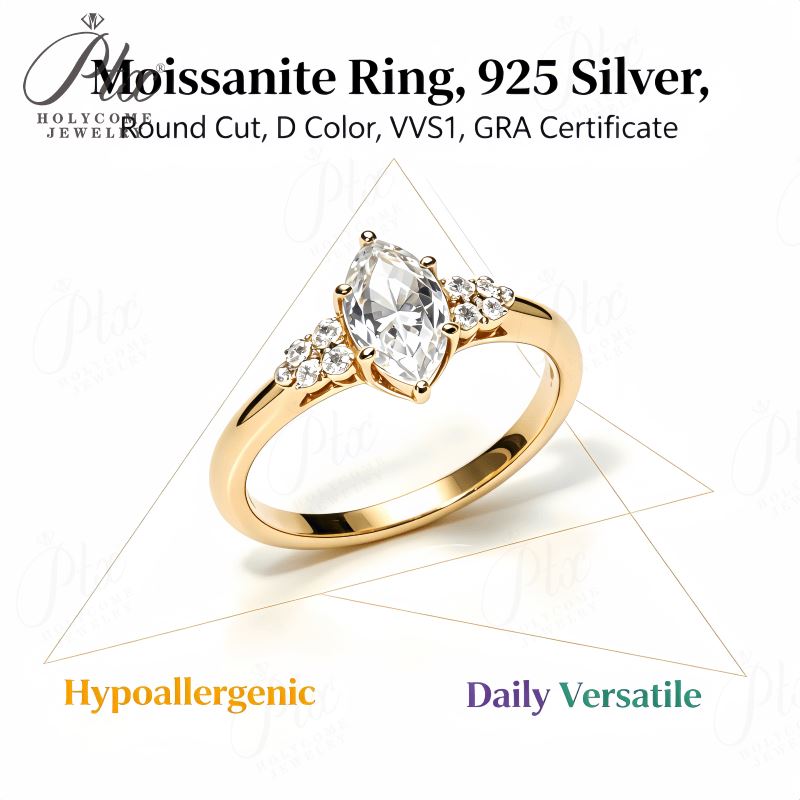
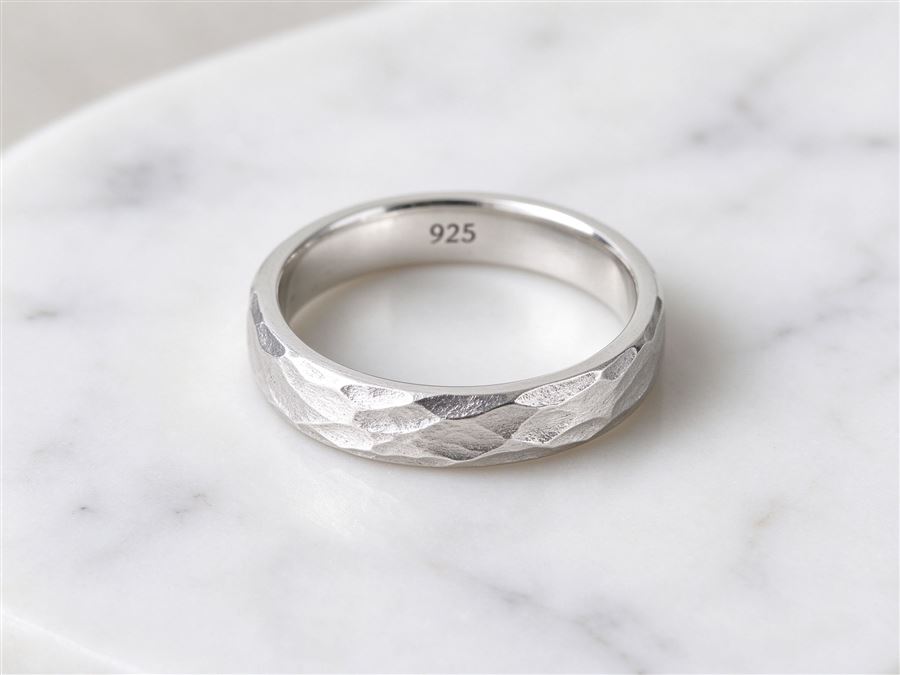
When clients picture their future ring, they picture the stone. They rarely picture the band. Yet the width of that band decides more of the ring's finished look than almost any other choice you will make. A 2mm shank and an 8mm shank can hold the identical center diamond and read as completely different objects.
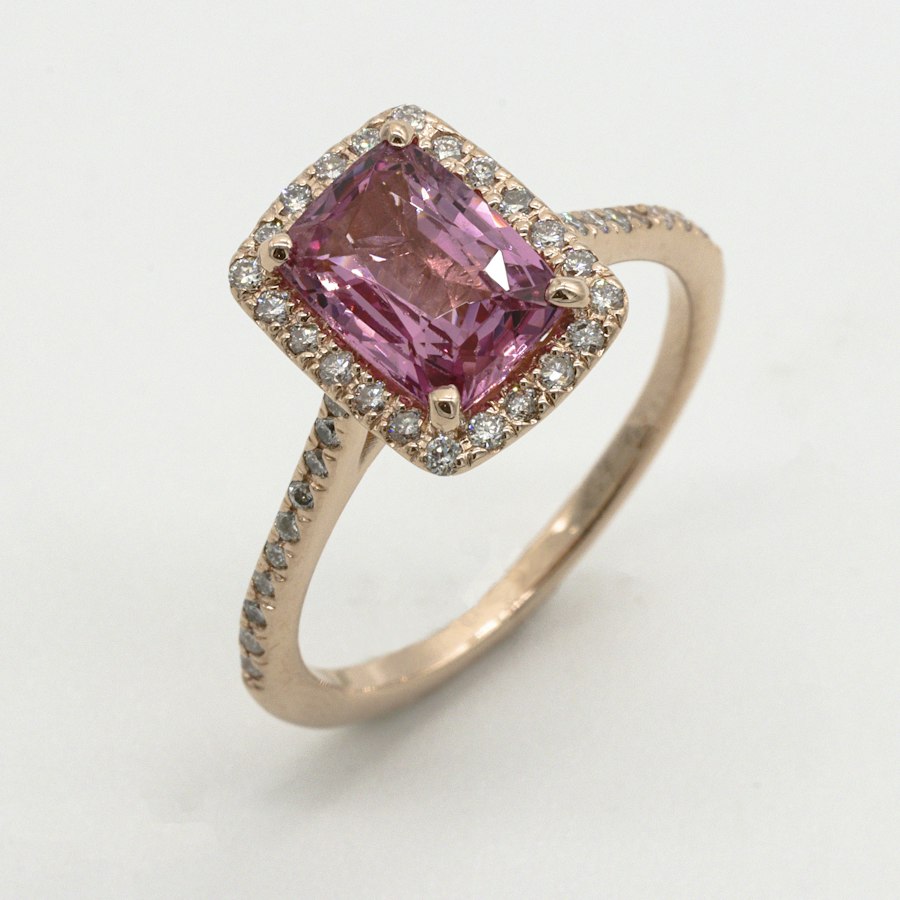
In bespoke work, band width is a dial, not a default. You set it deliberately, because it changes how the ring sits on your hand, how big the diamond appears, and what you can stack alongside it.
How width changes the stone
This surprises people. A thin band makes a center stone look larger, because less metal competes for attention and the eye lands straight on the diamond. A wide band does the opposite—it frames the stone with visual weight and can make a modest center read smaller than it is. If your heart is set on a particular diamond size, band width is one of the cheapest levers you have to influence its face-up presence.
Width also affects the shoulder. A narrow shank tapers quickly into the setting and feels delicate. A wide band can flow straight into the gallery and give the whole ring a grounded, architectural look. Neither is correct; they just say different things.
Matching width to your hand
Finger length and knuckle size do most of the deciding. Long, slender fingers carry wide bands with ease and can look bare in something too delicate. Shorter fingers usually benefit from a narrower shank, which leaves more visible skin around the ring and elongates the hand. Knuckles that are noticeably wider than the base of the finger want either a wider band to bridge the gap or a comfort-fit inner profile that slides over cleanly. Our notes on cut shapes for hand proportions pair naturally with this decision.
Comfort and everyday wear
A wide band covers more finger, which some people love and others find hot. It also conducts temperature more—a wide platinum band in winter feels noticeably colder. Narrow bands are lighter and less obtrusive but can bend more easily over years of wear. There is a reason everyday wedding bands sit around 2mm to 4mm: that range is the sweet spot between visible presence and ruggedness.
Stacking and resizing implications
Width is where stacking plans are won or lost. A wide engagement band leaves little room beside it, and any wedding band must be shaped to nest against it. If you intend to stack multiple rings, keep each band modest in width so the whole group stays comfortable. Width also affects resizing: very wide bands are harder to adjust, and eternity-set versions often cannot be resized at all—so get the size right the first time.
Men's and women's width conventions (and why they are loose)
Stock jewelry defaults to a narrow band for women and a wide one for men, but those conventions are habits, not rules. A woman with large knuckles or a career in manual work may be far more comfortable in a 5mm band than a 2mm one. A man with slender fingers may look lost in a 10mm band and find a 4mm to 5mm far more balanced. The bespoke advantage is that you are sizing to the hand, not to a gendered catalog. We have made everyday bands at 1.8mm for clients who wanted them almost invisible, and at 9mm for clients who wanted a piece with real presence, and both were correct for the person wearing them.
Width and durability
A narrower band is thinner metal, which means it can wear through faster over decades of contact. A wide band spreads that wear across more surface, which is why most men's wedding bands reach 5mm or more. If your plan includes an engagement band that will also serve as your everyday ring, lean toward the slightly wider end of comfortable. If it is a dress ring worn occasionally, a delicate width is a pleasure. Pair the decision with a look at what normal wear on a band looks like so you know what to expect from your chosen width over time.
Try it before you specify it
If you have a ring already in a width you like, measure it with a ruler across the band. That number—usually somewhere between 1.8mm and 6mm for everyday wear—is your personal baseline. From there, going narrower makes the ring feel delicate and lighter; going wider makes it feel present and architectural. Do not decide this from a photograph. Hold a ruler against your own finger, put on an existing ring, and picture the band next to the hands you actually use every day. The bespoke commission will be built to that number, and getting it right now saves a resizing conversation later.
Treat band width as a design decision, not a default. Measure your existing rings, hold up a ruler to your finger, and picture the ring in the hand you actually live in. The right proportion is the one you stop noticing after a week—in the best way.