A stack of thin rings on one finger is the most personal everyday jewelry a person can wear. Each ring can mark a year, a child, a stone, a state of mind. The trick is that a stack only works if the rings agree—the widths sit together, the metals match, the finishes read as one system. Buy three thin bands from three different shops and they wobble and gap. Design them together, and they become a single, quiet object on the hand.
Widths that stack
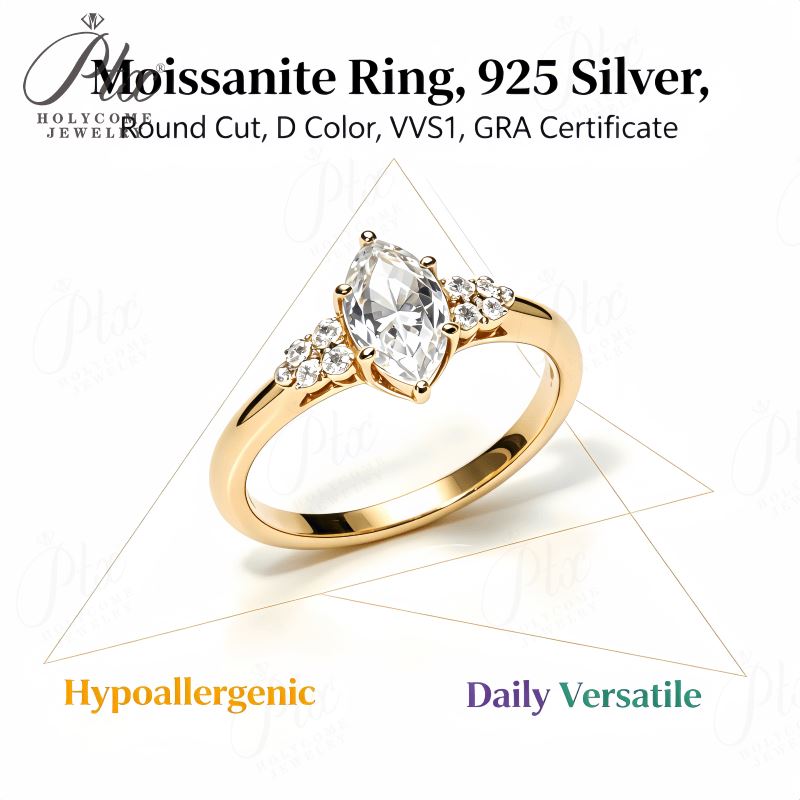
A stack of 1.5–2mm bands reads delicate; a stack built on a 3mm base reads substantial. The rule is to keep the widths within about a millimeter of each other, or to deliberately step them—a thin band flanked by a wider one—so the difference looks designed rather than accidental. Three rings of the same width in slightly different metals is the cleanest look. A single statement ring next to two thin bands is the most common and most flattering arrangement.
Metals and finishes
Mixed-metal stacks are beautiful—yellow, rose, and white together—but they should be a deliberate choice, not an accident. Polished next to polished reads clean; polished next to hammered reads disjointed unless you meant it. If you are building a stack over years, pick a base metal and a finish and stay consistent, so later additions slot in. The beauty of bespoke is that we keep the file of every band, so a ring ordered three years later matches the system exactly.
| Stack composition | Widths | Look |
|---|---|---|
| Three thin bands, same metal | 1.5mm each | Delicate, quiet |
| One statement + two thin | 3mm + 1.5mm | Balanced |
| Mixed metals, same width | 2mm each | Modern, layered |
| One pavé + two plain | 2mm | Sparkle anchor |
Building it over time
The best stacks grow slowly—a band at a graduation, a stone at a child's birth, a plain gold circle at a work anniversary. Each addition is designed against the rings already on the hand, which is why we keep the CAD files. A ring added later in a different width or finish will never sit flush, so we measure the existing stack and cut the new band to match. If you are starting one, our custom process guides walk through widths and metals.
Sizing and wearing a stack
A stack sits on one finger, so the rings are sized together rather than individually. The bands should slide on and off as a group, which means each is sized a touch looser than a single ring would be—otherwise the stack binds. Thin bands also wear down faster than a wide one, so plan to rotate the rings on and off rather than wearing the exact same three every day for thirty years. A stack that never comes off will, over decades, wear unevenly. We can size the set so it moves as one unit, which is the difference between a comfortable stack and a ring you have to soap off.
Mixing metals on purpose
A stack is the one place mixing metals looks deliberate rather than mismatched. Yellow gold, rose gold, and a thin platinum band stacked together read as collected, not confused. The trick is to vary the widths and the finishes so the eye has somewhere to land—one polished band, one satin, one textured. If you start a stack now, leave room: a ring added next year, and another the year after. Design the first band as the anchor, in the metal the wearer reaches for, and let the later bands play around it. A stack is built over years, not bought in one box.
Starting a stack the right way
If you are starting a stack rather than adding to one, design the first band as the anchor. Make it in the metal you reach for, at a width you will not tire of, and keep it plain. The bands added later are the ones allowed to be playful—a textured one, a birthstone one, a thin diamond one. A stack built one piece at a time, for real occasions, reads far better than three matching bands bought together. Each ring should have its own reason for existing, which is what makes the whole finger a biography rather than an outfit.
Stack rules worth following:
- Size the set as one group, so it slides off together.
- Vary widths and finishes so the eye has somewhere to land.
- Rotate the rings occasionally to even the wear.
- Design new bands against the ones already on the hand.
A stack worn for a decade tells the story of the life that added each ring. Build it slowly, size it as one group, and vary the widths and finishes so it reads as collected. The bands added later are designed against the ones already there, so the whole finger sits flush. That is the stack that lasts. Size the rings as one group so the whole hand slides off together. Vary the widths and the finishes, and start with a plain anchor band. Add a new ring for a real occasion, not a sale. Start plain, and let the years add the rest.