The best time to resize a ring is before you order it, because sizing correctly the first time beats resizing every time. But fingers change. Weight changes, pregnancy changes, seasons change, and a ring that fit on the wedding day may be loose or tight a year later. Resizing a plain band is straightforward. Resizing a pavé or a halo is more involved. Here is how it works, and what to ask before you commit.
IHow Resizing Works
A basic resize cuts the band at the bottom, removes a small piece (to make it smaller) or adds a small piece of matching metal (to make it larger), and solders the joint back together. The joint is then polished so it is invisible. On a plain wedding band, this is a ten-minute job and the ring comes back looking new.
On an engagement ring with pavé stones down the shank, the process is more complex. The stones near the bottom of the band can be damaged by the heat of soldering, so they are removed first, then reset after. That adds time and cost. On a halo ring, the halo itself is usually not affected, but the band still needs care.
IIHow Much Can You Resize?
A plain band can be resized up or down by about two full sizes without trouble. Beyond that, the metal work weakens and the band may need to be rebuilt. If the ring is more than two sizes off, it is worth asking the jeweller whether the band should be remade rather than stretched.
Stretching a ring on a mandrel is a shortcut for minor size changes, but it thins the metal and is not recommended on a quality ring. The cut-and-solder method is the right way.
IIIWhen Resizing Is Not Recommended
Some rings should not be resized. A full circle of pavé stones all the way around the band is hard to resize because every stone near the bottom has to come out. A ring made of titanium, cobalt, or tungsten cannot be resized at all, because those metals are too hard to cut and solder. Wood rings, antler rings, and resin rings cannot be resized. If you are buying a ring in one of these materials, size it correctly the first time.
HOLYCOME rings are built in gold, platinum, or silver, all of which resize well. If your design includes titanium or stainless steel accents, those parts cannot be resized.
IVResizing a Ring You Bought From Us
If you bought a custom ring from HOLYCOME and the size is off, send it back. We resize our own rings as a service, and we know the design because we built it. The cost is modest, and the turn around is two weeks. We will also check the prongs and clean the ring while it is on the bench.
If you bought a stock-style ring from us that turns out to be half a size off, we can usually adjust it without rebuilding. If it is a full size off, we may recommend remaking the band, which is cheaper than forcing a bad resize.
VSizing Correctly the First Time
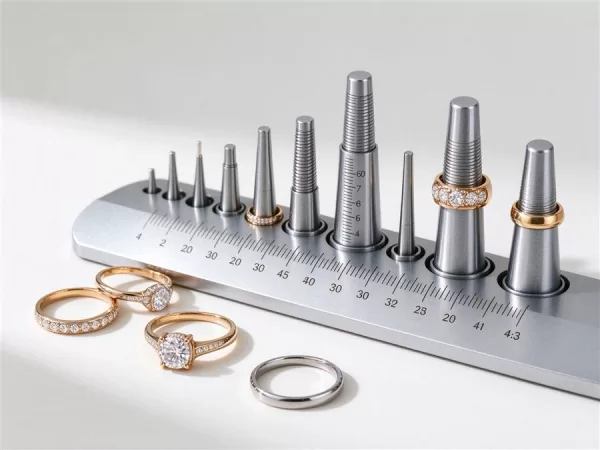
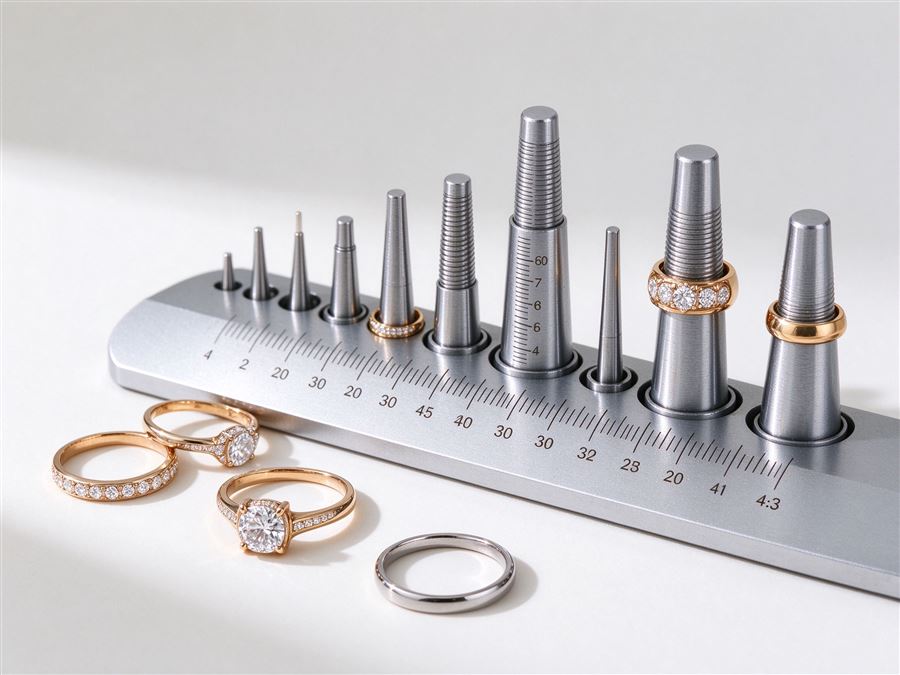
The best resize is the one you do not need. Measure the finger at the end of the day, when it is at its largest. Measure it when the weather is warm, not cold. Measure the correct finger, not the adjacent one. If possible, use a professional mandrel at a jeweller. If you cannot, borrow a ring she already wears on the correct finger and measure it against a sizing chart.
Remember that fingers swell in the summer and shrink in the winter. If you are proposing in December, size for the warm weather finger, because the ring will be a little loose in July.
VIThe Stacking Problem
If the engagement ring will sit next to a wedding band, the two rings should be sized together. A ring that fits perfectly on its own may sit at an angle next to a wedding band. When you order the set, tell us the wedding band will stack, and we will shape the inside of the engagement ring so the two sit flush. This is called a contour or a comfort fit on the inside, and it is a small detail that matters.
VIIResizing After Years
Fingers change over decades. A ring that fit at twenty-five may be loose at forty-five because the knuckles have changed. That is normal. A resizing after ten years of wear is also a chance to have the prongs checked, the band polished, and the rhodium re-plated. Treat the resizing trip as a full service visit.
VIIIHow Resizing Actually Works
A basic resize cuts the band at the bottom, removes a small piece to make it smaller, or adds a small piece of matching metal to make it larger, and solders the joint back together. On a plain band this is a ten-minute job. On a ring with pavé down the shank, the stones near the bottom are removed first and reset after, which adds time and cost.
IXHow Much You Can Go Up or Down
A plain band can be resized up or down by about two full sizes without trouble. Beyond that, the metal weakens and the band may need to be rebuilt. Stretching a ring on a mandrel is a shortcut that thins the metal and is not recommended on a quality ring. The cut-and-solder method is the right way.
XWhich Rings Cannot Be Resized
A full circle of pavé all the way around the band is hard to resize. Titanium, cobalt, and tungsten cannot be resized at all, because those metals are too hard to cut and solder. Wood rings, antler rings, and resin rings cannot be resized. If you are buying a ring in one of these materials, size it correctly the first time.
XISizing Correctly the First Time
Measure the finger at the end of the day, when it is at its largest. Measure it when the weather is warm. Measure the correct finger. If possible, use a professional mandrel. Remember that fingers swell in summer and shrink in winter. If you are proposing in December, size for the warm-weather finger.
XIIHow Resizing Actually Works
A basic resize cuts the band at the bottom, removes a small piece to make it smaller, or adds a small piece of matching metal to make it larger, and solders the joint back together. On a plain band this is a ten-minute job. On a ring with pavé down the shank, the stones near the bottom are removed first and reset after, which adds time and cost.
XIIIHow Much You Can Go Up or Down
A plain band can be resized up or down by about two full sizes without trouble. Beyond that, the metal weakens and the band may need to be rebuilt. Stretching a ring on a mandrel is a shortcut that thins the metal and is not recommended. The cut-and-solder method is the right way.
XIVWhich Rings Cannot Be Resized
A full circle of pavé all the way around the band is hard to resize. Titanium, cobalt, and tungsten cannot be resized at all, because those metals are too hard to cut and solder. Wood rings, antler rings, and resin rings cannot be resized. If you are buying a ring in one of these materials, size it correctly the first time.
XVSizing Correctly the First Time
Measure the finger at the end of the day, when it is at its largest. Measure it when the weather is warm. Measure the correct finger. Remember that fingers swell in summer and shrink in winter. If you are proposing in December, size for the warm-weather finger. If the size is off, send the ring back to us rather than to an unknown jeweller, because we know the design.
XVIThe Bottom Line
Size the ring correctly the first time, because resizing works but it is not free. Plain bands resize easily. Pavé bands take a little more work. Tungsten and titanium cannot be resized at all. If the size is off, send the ring back to us rather than to an unknown jeweller, because we know the design. And measure at the end of the day, in warm weather, on the correct finger.
XVIIRelated Articles
- Matte, Polished, or Brushed: Choosing Your Ring's Surface Finish
- Recreating an Old Family Ring as New: Heirloom Remakes
The Wikipedia entry on engagement rings gives an independent overview of engagement ring traditions and settings.
XVIIIFrequently Asked Questions
What ring sizes can you supply in bulk?
US sizes 5–12 including half sizes. Send a size breakdown with your order and we cast to that curve; comfort-fit inner bands reduce resize requests.
Can I order a mixed size run instead of one size?
Yes. Mixed runs are standard for wholesale: specify quantity per size and we pack and label by size at no extra labor cost.
What is the MOQ for custom ring designs?
50 pieces per design for existing molds; 100–300 pieces when a new mold or CAD model is required.
How should I price rings for retail margin?
Most partners use a 3–4x markup on FOB cost for sterling and 2.5–3x for moissanite solos, which keeps landed cost under 30% of retail.
Related reading: 7 Custom Ring Mistakes to Avoid Before You Order, Bulk Custom Jewelry: What Wholesale Buyers Need to Know, Do You Need an Appraisal After a Custom Ring? What It Covers.