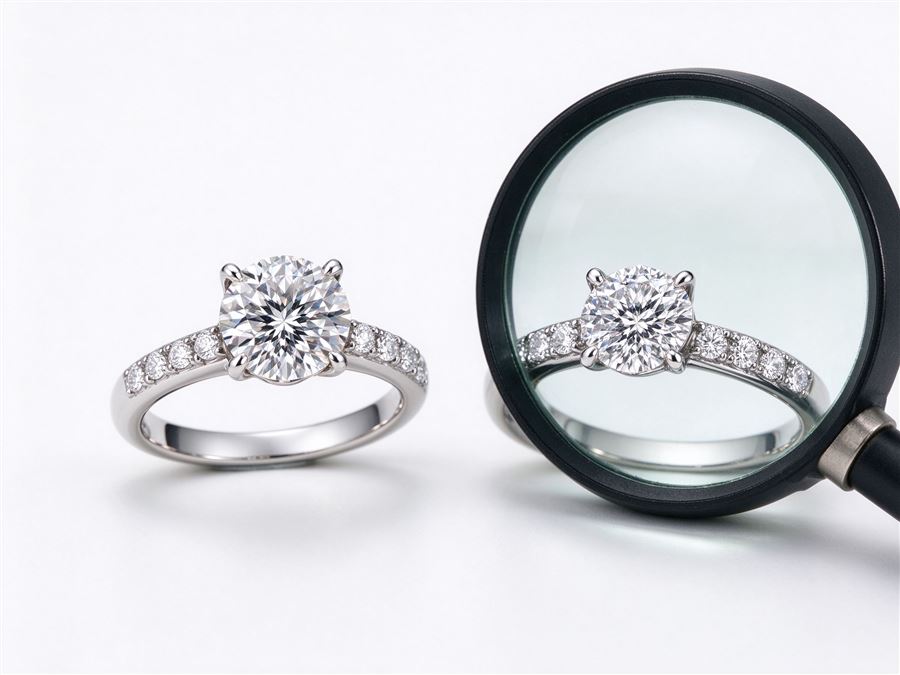
There is a drawer in almost every house with a ring in it—one that no longer fits, a style nobody wears, a ring from a life that has passed. That ring is not trash. It is gold and a stone sitting unused, and the cheapest and most sentimental thing you can do with it is turn it into a pendant. A pendant carries the same stone close to the heart, on a chain you actually wear, without needing a finger size at all.
Why a pendant beats keeping the ring
A ring that does not get worn is a ring that loses its meaning. Resizing it once may not help if the style itself feels dated. A pendant sidesteps both problems: it needs no size, and the stone reads larger against clothing than it did on a hand. A small center stone, reset as a pendant, often looks more deliberate than it ever did as a ring. The chain carries the eye, and the stone becomes a focal point rather than a small mark on a finger.
What survives the conversion
The center stone almost always survives. The setting it sits in is reused as the pendant head. The old band is cut away, and a new bail—the loop that slides onto the chain—is soldered to the top. Side stones, if they are sound, can be kept and arranged around the head. Chipped stones are removed and replaced or left out, depending on what you want. We photograph and lay out every stone before cutting anything, so you decide what survives.
- Center stone: kept and reset into the pendant head.
- Old band: cut off, and its gold credited as scrap.
- Bail: a new loop soldered on, sized for a chain.
- Side stones: kept if sound, omitted if chipped.
Cost and timeline
A ring-to-pendant conversion runs $300–$800, depending on the stone and the new chain, and takes two to four weeks. The old gold is credited, and you choose a chain length—usually 18 or 20 inches. Compare that with buying a new pendant, where the stone alone might cost a thousand. The conversion reuses what you already have, which is both cheaper and more meaningful.
| Step | What happens | Time |
|---|---|---|
| Assessment | Photograph stones, plan the cut | 1 day |
| Cut and reset | Band off, bail on, stone seated | 1–2 weeks |
| Finish and chain | Polish, fit chain | 2–4 days |
When it is the right move
Convert the ring when you want to keep the stone but never wear the band. Keep the ring itself when it is an engagement or wedding ring with a meaning that belongs on a hand. Either choice is honest. For more on resets and conversions, our custom process guides walk through the options.
Choosing the chain
The pendant head is the stone; the chain is what makes it wearable. A thin 1mm box chain suits a small stone; a slightly heavier rope chain carries a larger pendant without looking clunky. Length matters more than people expect: 18 inches sits at the collarbone, 20 inches lower. Tell us what necklines the wearer favors, and we proportion the chain to match. The chain is usually included or added for $80–$200, and it should match the pendant head's metal. A pendant on the wrong chain is like a ring on the wrong finger—close, but not right.
When to keep the ring instead
A pendant conversion is not always the right move. If the ring is an engagement or wedding band with a meaning that belongs on a hand, resizing or resetting it back into a ring usually beats turning it into a pendant. Convert to a pendant when the style itself feels wrong, when the finger no longer fits for good, or when the stone reads better near the face. We help make that call at the consultation, because the sentimental reading of the piece matters as much as the physical one.
Insurance and paperwork
A reset changes the piece, so update the jewelry insurance. We supply a new appraisal with the conversion, describing the pendant, the stone, and the chain. The old ring's certificate, if the stone has one, carries over. Because a pendant takes less knocks than a ring, the insurance is usually cheaper than for the same stone in a setting. Keep the appraisal with the chain receipt, and the piece is covered for its new life.
Bring in the ring, tell us the story, and we will lay out every stone before we cut. Two weeks later the same gold and the same stone sit on a chain instead of a finger. It costs less than a new piece, and it carries the history the drawer had been storing.
A drawer that holds a ring you never wear is a pendant waiting to happen.