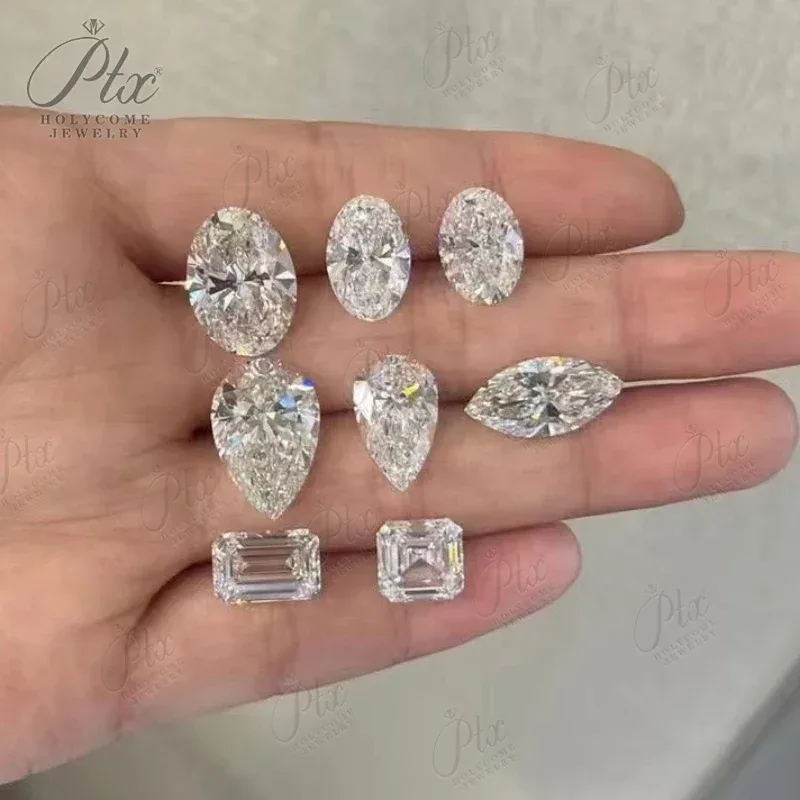
Most buyers open a loose lab-grown gemstones category on a price filter and close it on a spec they cannot verify.
IThe spec sheet is the contract, not the brochure
A Loose Lab-Grown Gemstones listing can be rewritten in an afternoon. The spec sheet behind it is what production actually works to. The range holds 160 designs in this category.
Reading six fields correctly removes most of the disputes that show up three months after an order.
lab grown diamond accounts for 100% of the designs, so stone sourcing is already settled for most of the range.
IIField by field
| Field | What it controls | Common misread |
|---|---|---|
| Base metal | Wear life, repolishing | Read as plating color |
| Stone and origin | Disclosure, price band | Read as natural by default |
| Carat or size | Visual weight, quote | Read as approximate |
| Setting type | Repair path, stone security | Read as decorative detail |
| Finish | Surface look, rework cost | Read as permanent |
| MOQ | Order shape, stock access | Read as negotiable |
Lab grown diamond is the dominant stone at 100%.
With 160 designs on file, the reorder path usually exists before the first order is placed.
IIITwo fields that carry the most risk
Setting type decides whether a stone can be replaced without remaking the piece, and finish decides whether a repolish restores the look or destroys it. Both are cheap to confirm before production and expensive to discover afterwards.
IVHow to test a spec sheet in one afternoon
- Match the metal stamp on the sample against the stated base
- Weigh the stone and compare with the carat figure
- Check the setting from the reverse side, not the front
- Confirm the finish under daylight, not studio light
- Ask what the MOQ changes if the design is altered
Reference designs in the range include Loose Lab-Grown Gemstone 0001; Loose Lab-Grown Gemstone 0002; Loose Lab-Grown Gemstone 0003.
VTurning the sheet into a listing you can defend
A listing built from the sheet survives a returns conversation. A listing built from the photo does not. Copy the six fields across, state them plainly, and remove adjectives that the sheet does not support.
VIRange snapshot: Loose Lab-Grown Gemstones by the numbers
Lab grown diamond is the dominant stone at 100%.
| Dimension | Reading | Buying note |
|---|---|---|
| Designs on file | 160 | Shortlist can come from stock patterns |
| Dominant stone | lab grown diamond (100%) | Sourcing already settled |
Lab grown diamond is the dominant stone at 100%. Read the snapshot before the shortlist: a category that is narrow in metal but deep in cut behaves differently from one that is the other way round.
VIIFrequently Asked Questions
What if the spec sheet and the sample disagree?
The sample wins for the immediate order, but the disagreement has to be resolved in writing before a reorder, because production will follow the sheet.
Is the MOQ fixed per design?
It is set per design and per production path. Stock patterns carry the lowest minimums.
Can I get the sheet before ordering?
Yes, and it is the normal request. A factory that cannot produce one per design is a risk signal.
How detailed should my own listing be?
At least the six fields above. Detail that matches the sheet is what prevents disputes.
Does finish affect the price?
It can, because some finishes require extra handling. Ask whether the quoted finish is standard or a special request.
If you want to work from the current range rather than from a catalog PDF, send the two price slots you sell and the size bands you stock. We will reply with the designs that fit, the build on each, and the reorder path. HOLYCOME keeps the full range in one place.
The checklist below is the short version of everything above, and it is worth running before the quote rather than after the order.
- Confirm the design is a stock pattern and not a new build
- Match the base metal and finish against the spec sheet
- Check the stone origin wording before it goes on a listing
- Quote every design at the same MOQ tier before comparing
- Ask which design in the same price slot absorbs a stock-out


