IWhy Grading and Color Consistency Decide Your Loose CZ & Corundum Stone Orders
Loose CZ & Corundum Stones are graded before they ever reach a setting bench, and the grading paperwork plus color consistency across a parcel determine whether your finished jewelry sells cleanly or comes back as a complaint.
Wholesale buyers who treat color matching as an afterthought often end up with mixed lots in the same ring size, visible shade shifts between center stones and side stones, and customer returns that cost far more than the cents per carat saved on the cheaper parcel. This guide walks through the practical grading decisions you face when sourcing loose cubic zirconia and corundum in bulk, and how to lock in color consistency order after order.
IIUnderstanding What You Are Actually Buying: CZ Versus Corundum
Cubic zirconia is a lab-created material with a refractive index and dispersion close to diamond, which makes it a popular diamond alternative at a fraction of the cost. Corundum covers lab-created and natural sapphire and ruby family stones, valued for hardness and saturated color. Both categories are sold by the carat, and pricing per carat depends on the size range, cut quality, and color grade of the parcel.
The compliance point matters for your own product listings: moissanite is also a lab-created diamond alternative, but CZ and corundum are separate materials with different optical properties. If your catalog mixes all three, make sure every listing names the actual stone type. Likewise, name the true metal in every finished piece: 925 sterling silver, 10K/14K/18K solid gold, gold vermeil, or gold plated.
Vermeil and plated goods should never be described as solid gold, and mislabeling either the stone or the metal invites marketplace takedowns and consumer complaints.
Refractive Index and Dispersion: Why CZ Reads Differently Under Store Lighting
CZ has higher dispersion than corundum, so it throws more colored fire under spotlighting in a showroom or a product photo lightbox. Corundum reads deeper and more saturated, which suits colored-stone lines. If you are building a collection where white CZ center stones sit next to white CZ accents, dispersion matching is straightforward.
If you mix CZ centers with corundum side stones, expect a visible optical difference and plan your designs around it rather than assuming the stones will read as one material.
Hardness and Wear: Matching the Stone to the Jewelry Category
Corundum ranks near the top of the Mohs scale and holds up in rings that see daily wear. CZ is softer and will show edge wear sooner in high-contact settings like men's bands. For earrings, pendants, and occasional-wear pieces, CZ performs well and keeps your bill of materials lean. Match stone hardness to the category before you commit to a parcel size, because that decision shapes returns more than any grading certificate does.
IIIHow Color Grading Works for Loose CZ & Corundum Stones
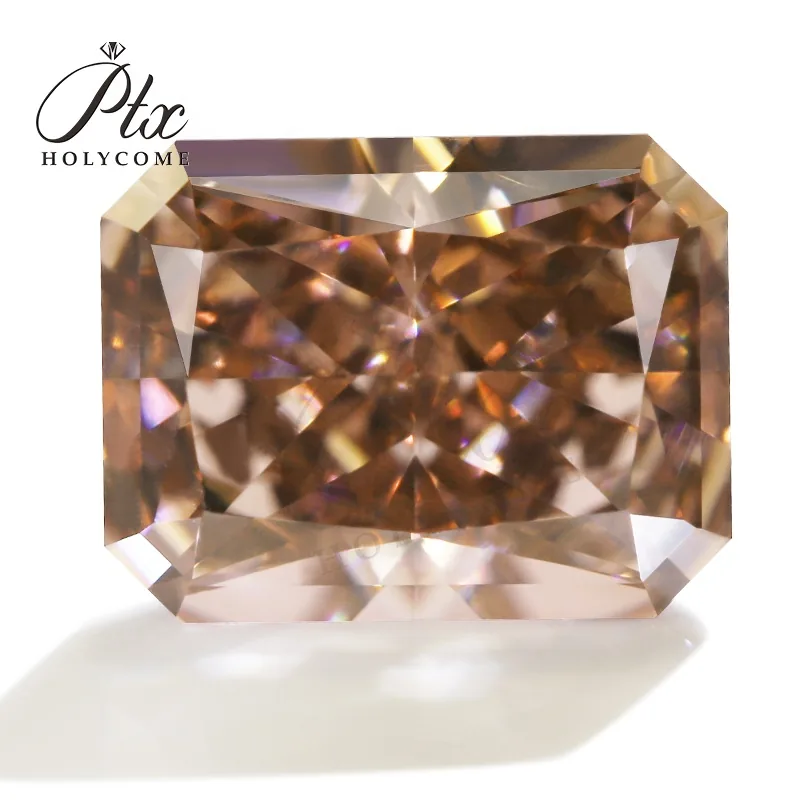
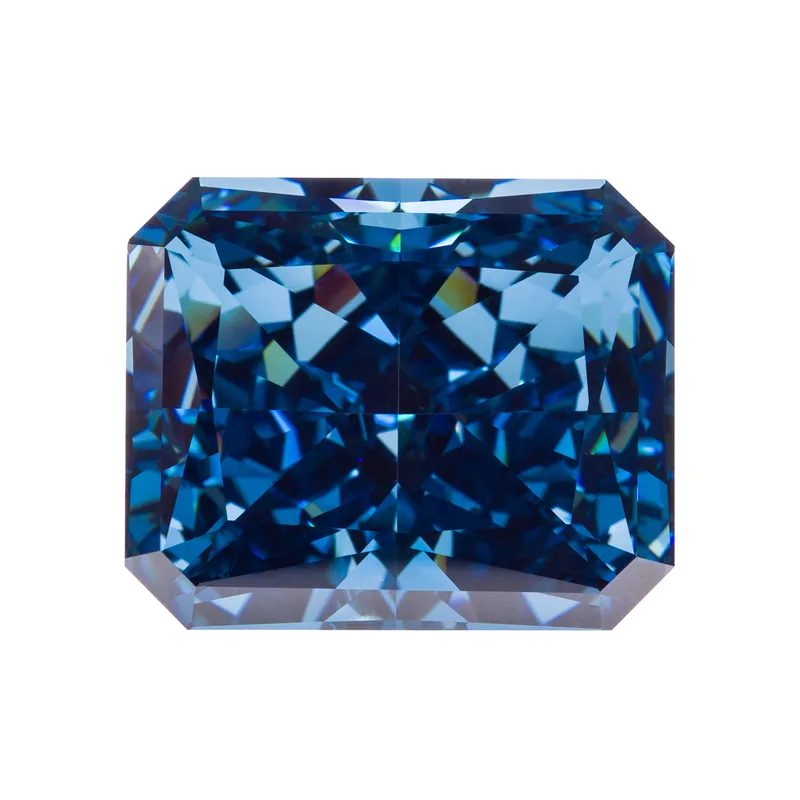
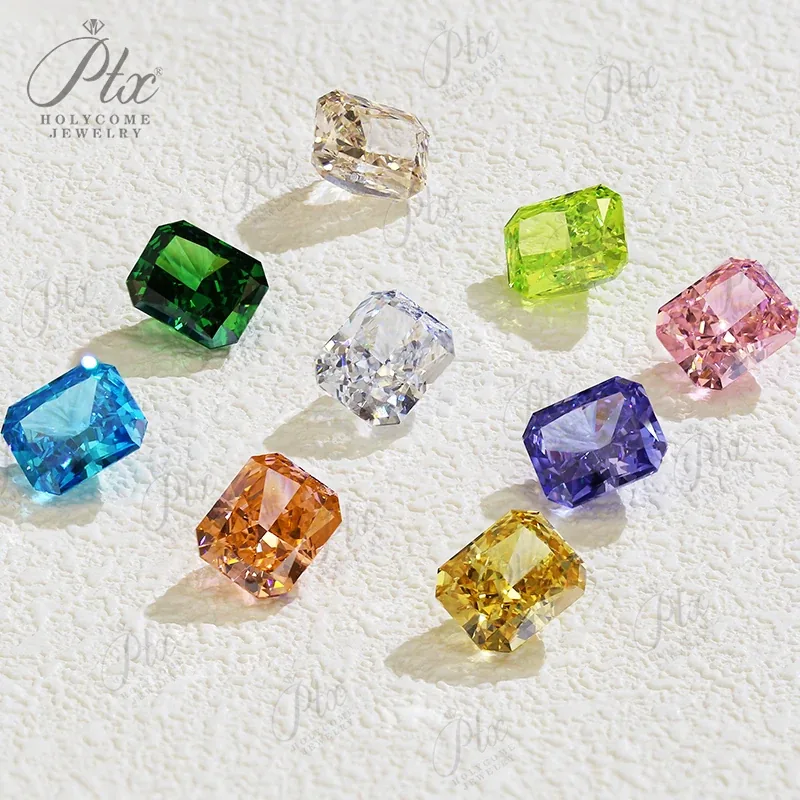
Color grading for loose stones describes body color, saturation, and tone. For white CZ, the practical question is whether the stone reads icy white, warm white, or slightly gray under daylight-balanced light. For corundum in blue, pink, yellow, and other shades, grading covers hue consistency and saturation across the parcel. Graded stones can ship with GRA or IGI papers, which gives you a third-party reference to attach to your purchase records and to reference in your own quality documentation.
Not every parcel needs certification. For high-volume accent stones, a documented internal grade plus a master-stone comparison may be sufficient. For featured center stones in your top-selling designs, GRA or IGI papers justify the added cost because you can pass that documentation story along to retail buyers. Decide the certification level per SKU, not per order, so your costing stays predictable.
Master Stones and the Parcel Approval Process
The most reliable way to enforce color consistency is a master-stone system. Ask your supplier to approve a reference stone from the first production parcel, keep it on file, and require every future parcel to match it under standardized lighting before shipment. This converts color matching from a subjective argument into a documented pass or fail step tied to your pre-ship inspection.
Lighting Conditions: The Variable Most Buyers Ignore
Color shifts depending on the light source. A parcel that matches under warm showroom light can split into two visible shades under daylight LED. Specify the lighting standard in your purchase terms, request photos or videos of the parcel under the agreed light source, and evaluate your own incoming stock under the same conditions. Consistency across your supply chain depends on everyone grading under the same light.
IVPractical Sizing and Specification Decisions for Wholesale Buyers
Once grading is defined, the next decisions are mechanical: size range, cut style, and tolerance. Round brilliant and fancy cuts behave differently in calibration, and small sizes tolerate less variance than large singles. Put your tolerances in writing on the purchase order so the pre-ship inspection has a clear standard to check against.
Here is a summary of typical specification points to define per SKU:
| Specification | What to Define | Why It Matters |
|---|---|---|
| Color grade | Master stone reference and lighting standard | Keeps parcels consistent across orders |
| Size tolerance | Calibration range per diameter | Prevents loose or forced settings |
| Cut style | Round, oval, princess, fancy shapes | Affects light return and setting fit |
| Certification | GRA or IGI papers where needed | Supports retail documentation claims |
With these four points defined, your supplier knows exactly what a conforming parcel looks like, and your receiving team can check the same four points on arrival. Any specification left verbal will eventually cause a dispute, so document everything before the deposit is paid.
VQuality Control Stages and What to Check at Each One
A three-stage QC process protects color consistency better than a single final check. Incoming inspection verifies raw material against the approved master stone and grade. In-process inspection catches shade drift during cutting and polishing, when a correction is still inexpensive. Pre-ship AQL inspection samples the finished parcel against your written specifications before anything leaves the factory.
For loose stones specifically, the pre-ship AQL step is where color lot mixing gets caught. Inspectors compare sampled stones side by side under the agreed lighting and against the master stone. If the parcel splits into two visible shades, it fails before it ships, and you avoid the far costlier scenario of discovering the split after setting hundreds of stones into finished goods.
What to Do When a Parcel Fails Inspection
A failed parcel should trigger a documented root-cause review rather than a quick re-sort. Was the raw material mis-graded at incoming, did the cutting floor mix two lots, or did the tolerance in your purchase order leave room for interpretation? Each answer points to a different fix. Buyers who simply accept a re-sorted parcel without a root-cause review tend to see the same failure repeat on the next order.
VIOrdering Terms: MOQ, Lead Times, and Payment Structure
Loose stones are sold by the carat, with pricing per carat depending on size range, cut, and grade. Stock styles carry a minimum order quantity of 1 piece, which makes sampling a specific grade and cut inexpensive. Custom work requires 30 pieces per style, which is the threshold where a dedicated production run and a documented master-stone comparison become practical.
Sampling takes 7 to 10 days, and bulk production runs 15 to 25 days after approval. Payment is by T/T with a 30 percent deposit and the 70 percent balance before shipment; PayPal is available for sample orders. Finished jewelry ships DDP to the US in 5 to 8 days. Build these lead times into your buying calendar, especially if your collections are timed to retail seasons, because grade approval and master-stone matching add a step before bulk production starts.
Sequencing Your First Order the Right Way
For a new stone specification, order a sample first under the 1-piece stock MOQ, evaluate it under your lighting standard, and only then approve it as your master reference. Approving a grade from photos alone skips the one step that prevents most color disputes. Once the master stone is approved, custom production at the 30-piece MOQ follows the 15 to 25 day bulk timeline with the grade locked in.
Costing Certification Into Your Price Structure
GRA and IGI papers add cost per stone, so decide which SKUs justify them. A practical approach: certify featured center stones in your hero products, and document accents with master-stone comparison plus your internal grade records. This keeps certification spend concentrated where it supports retail storytelling instead of spread thin across low-visibility accent stones.
VIIBuilding Color Consistency Into a Long-Term Supply Relationship
Color consistency is a systems problem, not a luck problem. Buyers who keep approved master stones on file, specify lighting standards in purchase orders, and require three-stage QC with pre-ship AQL inspection get repeatable parcels order after order. Buyers who re-explain their color requirements on every order get re-explained surprises on every delivery.
Keep a simple spec sheet per stone SKU covering grade, master stone reference, size tolerance, cut style, and certification requirement. Share it with your supplier at order placement and reference it at inspection. Over time, this documentation becomes your institutional memory, so consistency survives staff changes on both sides of the transaction.
Order Terms for Wholesale Buyers
MOQ is 1 piece for stock styles and 30 pieces for custom work, and loose stones are sold by the carat. Sampling takes 7 to 10 days, and bulk production runs 15 to 25 days after the sample is approved. Pricing is quoted per piece or per carat depending on the item. Payment is T/T with a 30% deposit and the 70% balance before shipment, and PayPal is accepted for sample orders.
VIIIFrequently Asked Questions
Do I need GRA or IGI certification for every loose stone order?
No. Certification makes sense for featured center stones and hero SKUs where third-party paperwork supports your retail documentation. High-volume accent stones can be controlled with a master-stone comparison and documented internal grading, which keeps per-carat cost lower.
How do I make sure colors match between orders?
Approve a master stone from your first parcel, keep it as the reference, and require every future parcel to match it under an agreed lighting standard before shipment. Put that requirement in your purchase order so the pre-ship AQL inspection checks against it.
What is the minimum order for custom loose stone work?
Stock styles have a 1-piece MOQ, which covers sampling a grade or cut cheaply. Custom work requires 30 pieces per style. Loose stones are priced per carat based on size range, cut, and grade.
How long does production take after I approve a sample?
Sampling runs 7 to 10 days. Bulk production takes 15 to 25 days after approval. DDP delivery to the US adds 5 to 8 days, so plan your calendar around roughly a month from sample approval to stock arrival.
What payment terms apply to loose stone orders?
Bulk orders use T/T with a 30 percent deposit and the 70 percent balance before shipment. Sample orders can be paid through PayPal, which lowers the barrier to testing a new grade or supplier before committing to volume.
Start With a Graded Sample Parcel
The fastest way to test a grading and color consistency program is to order a sample under the 1-piece stock MOQ, evaluate it under your lighting standard, and lock it in as your master reference. From there, custom production at the 30-piece MOQ follows a documented, repeatable process.
Browse our stone sourcing guides and product knowledge articles to sharpen your specifications, learn about our factory, QC process, and grading standards, or start a custom loose CZ and corundum stone order with a sample parcel matched to your color requirements.
Sources: Grading references: GIA gem education and GIA laboratory information.