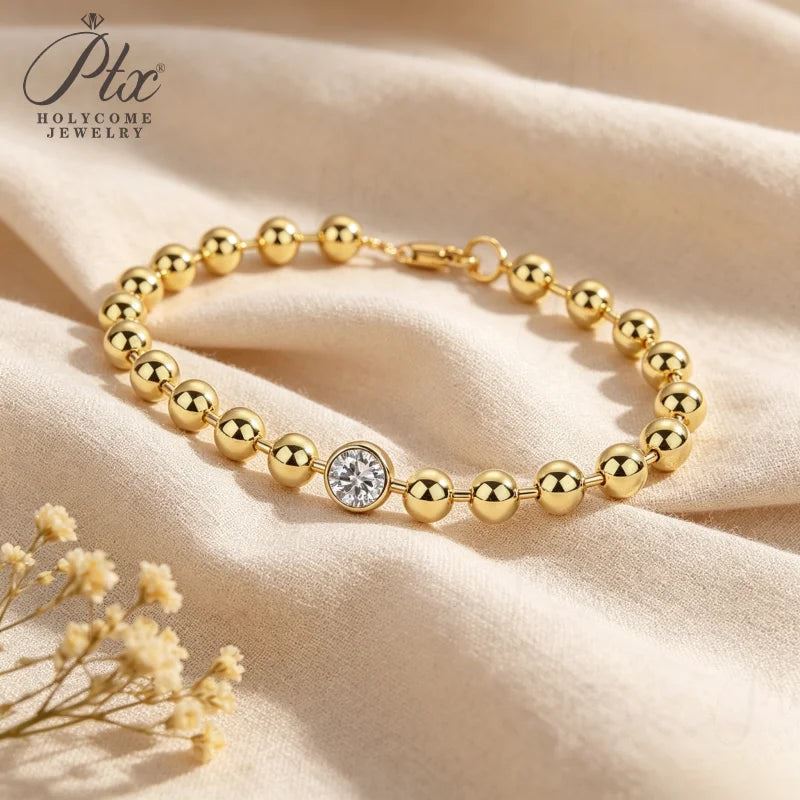
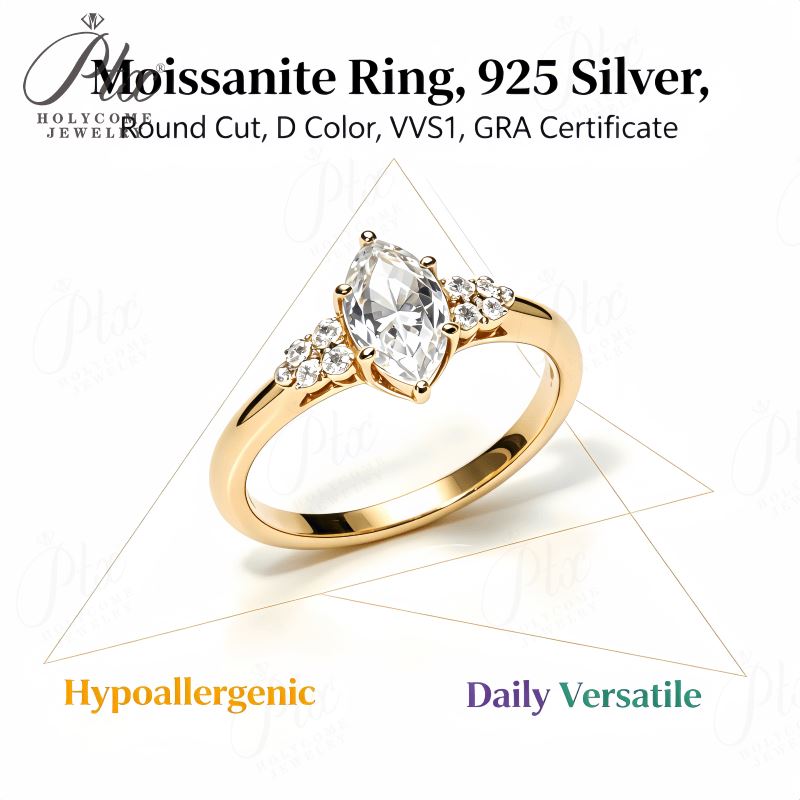
The instinct is to pick the diamond first and the setting second. Bespoke works the other way around, and the reason is practical: the setting defines what the stone needs to be. Once the head is designed, we know the exact millimeter measurements the stone must fill, and then we source within that frame. Reversing that order—buying a stone first—is how people end up working around a stone that does not fit the head they wanted.
The shortlist, not the single stone
When the design is set, we build a shortlist of three to five stones that fit the head and the budget. Each comes with its measurements, its grading report, and a photo or video in daylight. You compare them side by side rather than choosing from a single option. This is the advantage of a bespoke studio over a retail case: we are not selling the stone on hand, we are sourcing the stone for you. A shortlist also means you see the trade-offs—slightly better color versus slightly larger size—and decide which you prefer rather than taking what happens to be in the tray.
What the measurements mean
The setting fits numbers, not adjectives. For a round stone we need the diameter, the depth percentage, and the girdle thickness. For an oval or pear we need length and width, because the head is cut to those. A stone with a deep girdle sits higher; a shallow one sits lower. These numbers are why the design leads the search—the CAD model already knows the opening, and the stone must fill it without gaping or overhanging.
- Cut: the first priority. It controls sparkle.
- Measurements: must match the head exactly.
- Color: steered by the metal—warm gold masks warmer stones.
- Clarity: eye-clean is enough; inclusions under prongs are free.
- Carat: last, after the above is settled.
| Step | What you see | Typical time |
|---|---|---|
| Design locked | Approved CAD of the head | — |
| Shortlist | 3–5 stones, daylight video | 3–7 days |
| You choose | One stone, certificate | Your call |
| Casting and setting | Stone poured into the head | 2–3 weeks |
Daylight, not spotlights
A diamond that glows under a store spotlight can look flat in a restaurant. We send daylight videos of each shortlisted stone, because the light you live in is the light the stone will wear. If you are local, come in and look at the shortlist by the window. The stone you pick in daylight is the one you will recognize on your own hand. Once chosen, it ships to the studio and seats into the already-built head—which is why the whole process feels coordinated rather than improvised.
If you want to understand what a shortlist looks like, our custom process guides walk through stone sourcing.
Natural versus lab-grown in the shortlist
The shortlist is also where you decide natural versus lab-grown. A lab-grown diamond of the same visual size costs a fraction of a natural one, which means the shortlist can show you a 1.2ct grown stone alongside a 0.9ct natural, at the same money. See them side by side and the difference becomes practical rather than ideological. The tradeoff is resale: a grown diamond holds little secondary value, while a natural one holds more. For a ring worn for decades, most clients choose grown and spend the saved budget on a better cut or a platinum setting. The shortlist makes that comparison tangible rather than abstract.
Buying the stone on a budget
When the budget is tight, the shortlist is where the trade-offs become clear. You can step up the cut and drop the color to G or H, which the naked eye will not notice in a well-cut stone. You can choose a slightly lower clarity—VS2 or SI1—as long as any inclusion sits under a prong. The shortlist lets you see these choices rather than read about them. We present each option at its real measurements, so you decide whether half a carat matters more than a half-grade of color. That comparison is the value of commissioning rather than buying the one stone on the tray.
Trusting your eye
At the end of the shortlist, ignore the spec sheet and just look. Most clients pick a stone that is not the highest-graded one, because it has the life they want. That is correct. Grades measure a stone in a lab; you wear it in daylight, at dinner, on your hand. If one stone fires more quietly and warm and another, technically better, reads cold, choose the warm one. You will look at it every day for fifty years. The grader grades; you live with it.
The design leads, the stone follows, and the two fit like they were meant for each other. That is the difference between choosing a stone and then designing around it. Take your time on the shortlist, see the stones in daylight, and choose the one you cannot stop looking at. The rest—the setting, the metal, the polish—follows from that choice.