Few wedding band decisions generate as much quiet debate as this one: should the diamonds go all the way around, or only halfway? A full eternity band is the classic symbol of never-ending love, and it looks stunning in photographs. A half eternity band is the practical favorite of people who work with their hands, travel often, or simply want a band they never have to think about. Both are right. The wrong choice is picking one without understanding the trade-offs.
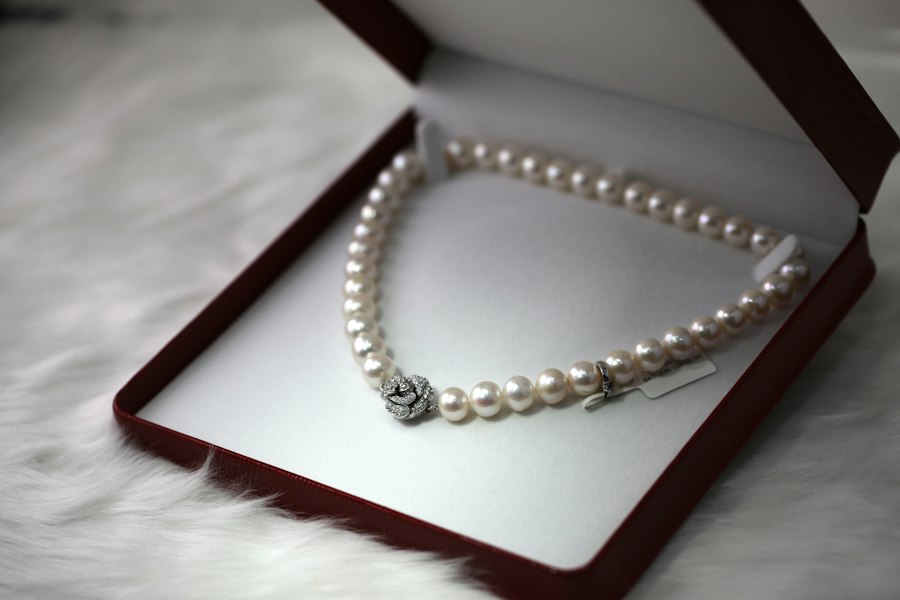
Let us define the terms first. A full eternity band has stones set continuously around the entire circumference of the ring, so that no matter how the band rotates on your finger, you see sparkle. A half eternity band has stones set across the top half, the portion visible on the back of your hand, and plain metal around the bottom half that touches your palm. There is also a three-quarter eternity, which is a compromise: more stones than a half, but plain enough on the back to be practical. Your jeweler can walk you through which proportion suits your finger width.
The visual difference is real but smaller than you might expect. When you look at your own hand, you almost always see the top of the ring, not the bottom. The half eternity band catches light from the same angle your eyes do, which means it looks nearly identical to a full eternity in everyday wear. The full eternity reveals itself mainly to other people when your hand is turned over, at a dinner table, or in photographs from unusual angles. If you are choosing a band purely for how it looks to you, the half eternity gives up very little.
The practical differences are where this decision gets serious. The first is resizing. A full eternity band cannot be resized in the traditional sense, because cutting the shank to stretch or shrink it would destroy the stone setting on the bottom. If your finger size changes later — and it does, with weight, age, pregnancy, and climate — a full eternity band either needs to be replaced or re-set, which is a meaningful expense. A half eternity band resizes exactly like a plain band, because the bottom half is solid metal. This is the single biggest reason we steer most clients toward the half eternity for a daily wedding band.
The second difference is comfort and durability. Stones on the bottom of a full eternity band press against your palm all day. For some people this is unnoticeable. For others, it catches, digs, and wears the setting down faster because the inside of the band is not smooth. Prongs or pavé on the underside also loosen more quickly, because that part of the ring takes the brunt of friction against desks, keyboards, and pockets. A half eternity band keeps the inside smooth and solid, which makes it more comfortable for everyday wear and longer-lived over decades.
The third difference is cost. Because a full eternity uses more stones and more labor to set them, it is typically 30 to 50 percent more expensive than a comparable half eternity. If you are stretching a budget, the half eternity lets you choose slightly larger or better stones on the visible portion, which is where your money actually shows. We talk through budget trade-offs like this in our piece on what you can really afford, and the same logic applies to wedding bands.
So when should you choose the full eternity? If the band is an anniversary piece, a right-hand ring, or a band you will not wear every day, the resizing and comfort drawbacks matter less. If you love the idea that the ring is the same from every angle, and you know your ring size will stay stable, the full eternity is a gorgeous and timeless choice. Many of our clients who already have a plain wedding band come back for a full eternity as a tenth anniversary upgrade, and that timing works beautifully because the full eternity becomes a special piece rather than the daily workhorse. We cover this kind of milestone commission in our guide to tenth anniversary jewelry.
One more consideration: how the band sits with your engagement ring. A full eternity band can be harder to pair flush, because the continuous stone row does not always nestle neatly against an engagement ring's setting. A half eternity is easier to contour, because the plain back can be shaped to fit. If you are designing both pieces together, we will model them as a set so you can see how they actually sit. Our article on matching a wedding band to your bespoke engagement ring goes into the nesting details.
At the end of the conversation, most clients land somewhere sensible: a half eternity for the daily wedding band, and a fuller eternity later as an anniversary upgrade. It is not a permanent decision. It is a starting point. Pick the one that matches how you actually live, and the rest can come later.