Anyone can describe a process. A portfolio shows what the hands actually produced. When you are choosing a bespoke jeweller, the work on their site or Instagram is the most honest document they have—more honest than the website copy, more honest than the showroom. The skill is reading it correctly, because a pretty photograph is not the same as a well-made ring.
Look at the close-ups, not the hero shots
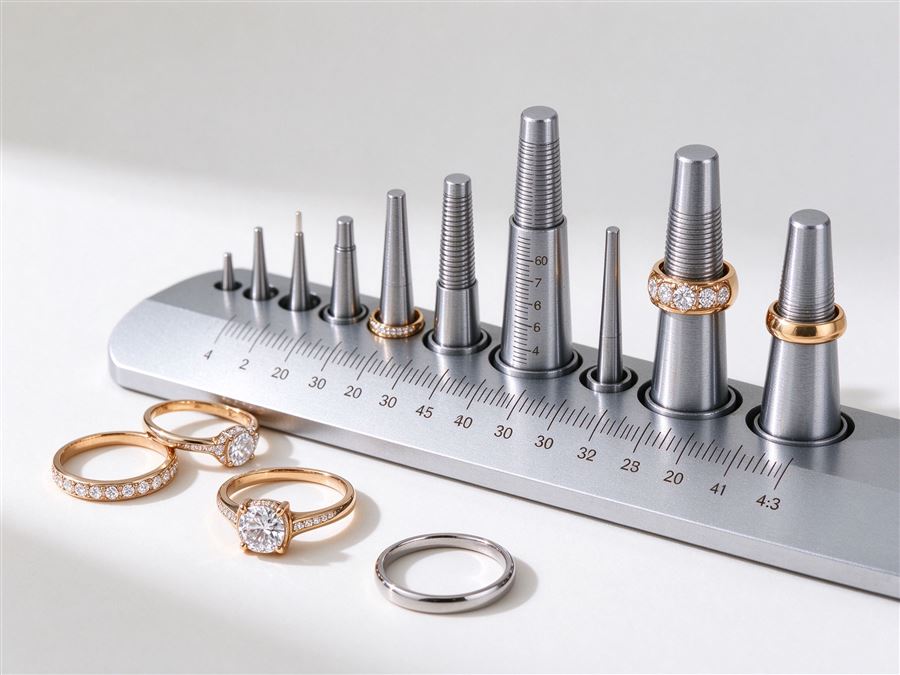
Hero shots sell the idea. Close-ups prove the making. Zoom in on the prongs: are they neat and uniform, or lumpy and uneven? Is the setting seated flat, or is the stone tilted? Do the two sides of a ring match, or is one side heavier? A jeweller who photographs the bench details is showing they are proud of the work. A portfolio of only softly-lit model shots raises the question of what they are hiding.
Look for the range, and the repeats
A strong portfolio has range—a solitaire, a signet, a pendant, a pair of earrings—because it means the jeweller handles different kinds of work. It also shows repeats of the same thing done well, which is a comfort. If every piece looks like the same model cast from the same mould, the studio may be dressing up catalog work as bespoke. Ask whether the pieces on the site were drawn and cast for real clients, and whether you can see a before-and-after of a commission.
- Close-up of prongs and settings: a sign of real craft.
- Mixed piece types: solitaire, signet, pendant, earrings.
- Before-and-after resets: shows they transform real work.
- Only soft model shots: a reason to ask for bench photos.
Talk to past clients if you can
A good jeweller is happy to put you in touch with a past client, or to share reviews that mention the process—the communication, the lead time, the final fit. What you want to hear is that the commission ran on time and the piece matched the CAD. A portfolio shows the object; a review shows the experience, which is half the product.
| Portfolio signal | What it means |
|---|---|
| Sharp bench close-ups | Craft they trust you to inspect |
| Mixed piece types | Range of real skills |
| Before-and-after resets | Transforms, rather than merely casts |
| Only soft model shots | Ask for more |
The one that fits your project
The best portfolio for you is not the most glamorous—it is the one that contains a piece like the one you want. If you are after a signet and their portfolio is all engagement rings, look elsewhere. For more on what to ask, see our custom process guides.
The questions the portfolio cannot answer
A portfolio shows the object; it cannot show whether the studio returns calls, hits dates, or handles a problem calmly. That is why the first consultation matters. Notice how they listen. Do they push a design you did not ask for, or do they probe how you will actually wear the ring? A studio that treats your lifestyle as a constraint to design around is thinking like a maker. One that treats you as a budget to upsell is thinking like a shop.
Trust the work that resembles yours
You do not need the fanciest portfolio in town. You need a portfolio that contains your kind of piece, made cleanly, more than once. If you want a low-profile bezel and their best work is high solitaire, the fit is wrong no matter how talented they are. Match the jeweller to the project, and the commission runs smoother than any rating suggests. Ask to see a piece like yours held in hand, then decide.
The gut check
After the portfolio and the questions, trust the quiet signal. You should leave the first consultation feeling that the jeweller understood the ring you described, rather than sold you one you did not. If you cannot picture them on the bench, keep looking. A bespoke commission is a weeks-long relationship; you want it with someone whose judgment you trust. The portfolio proves the hands. The conversation proves the judgment. Both are needed. A portfolio without a comfortable conversation is a shop; a comfortable conversation without a portfolio is a hobbyist. You are paying for both the hands and the person you will email for eight weeks. Choose accordingly. The portfolio is evidence; the conversation is the relationship. Both must be right, because the ring you wear for forty years starts with the person you trust to make it.
Look at the close-ups, check the range, and ask for bench photos. If the studio is proud of the making, they will show it. If they deflect, keep looking. The hands and the judgment together are what you are paying for.
The right jeweller has already made your kind of thing, more than once, and can prove it.